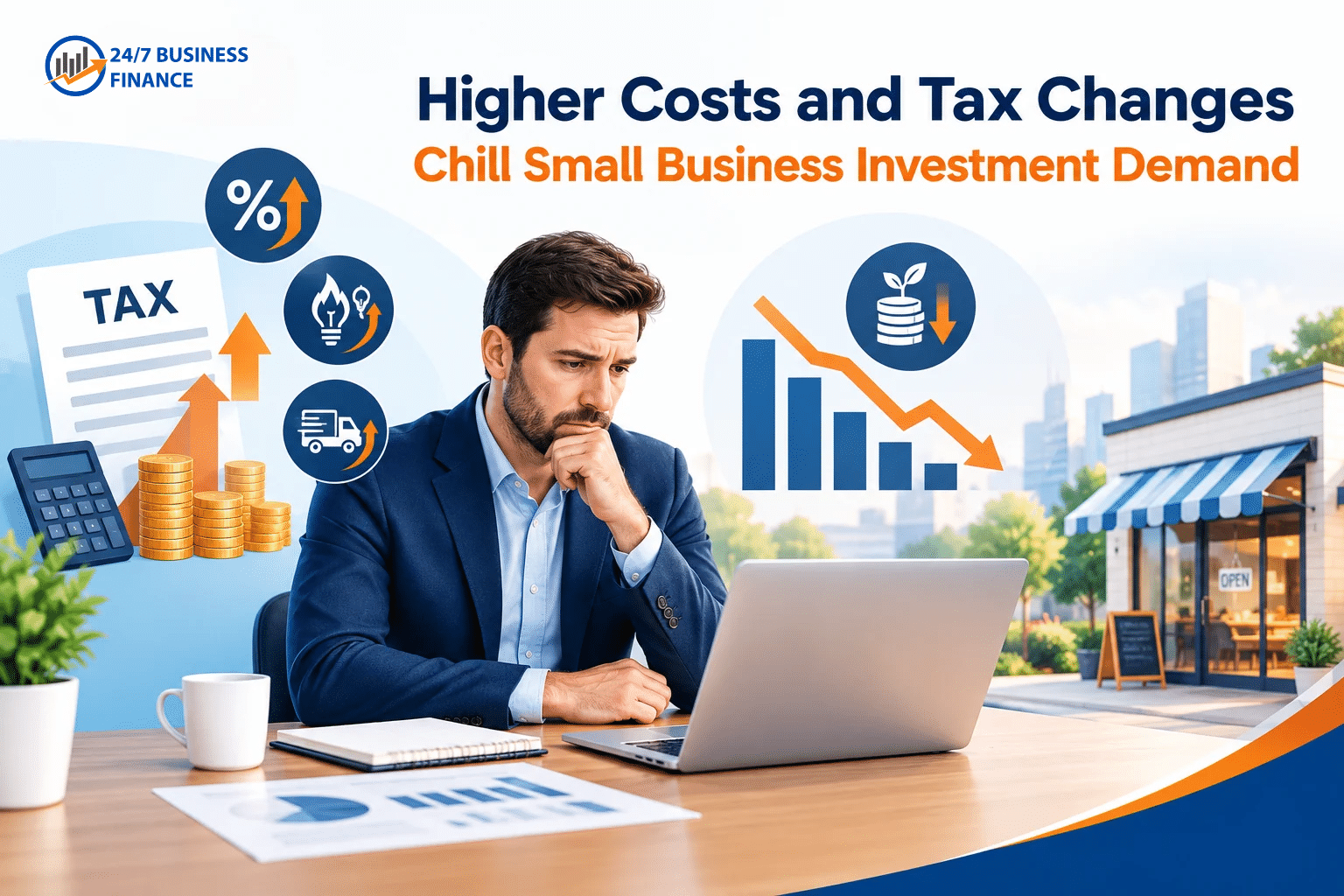
Higher Costs and Tax Changes Chill Small Business Investment Demand

EY UK Outlook: Higher Costs and Tax Changes Chill Small Business Investment Demand
UK small business owners are pulling back on big spending decisions. Rising running costs and tax changes are making them cautious. EY’s latest economic outlook confirms what many owners already feel at the till and in the payroll run.
This guide explains what EY forecasts and why small firms hesitate. It also shows how you can keep your business moving when conditions feel tight. You will find practical steps, real figures and a clear FAQ at the end.
What Is the EY UK Outlook Saying About Business Investment?
EY publishes the ITEM Club forecast every quarter. It uses the same type of economic model that HM Treasury uses. Businesses, lenders and policymakers watch it closely.
The February 2026 Winter Forecast expects UK GDP to grow by 0.9% in 2026, then 1.3% in 2027, and settle at 1.4% from 2028. That is steady growth, but it is not a boom. Small firms feel the gap between a headline number and their own bank balance. ey
The Headline Number: Business Investment Set to Shrink
The more worrying figure sits further down the page. EY now expects UK business investment to shrink by 0.2% in 2026. In November, it had predicted growth of 0.8%. ey
That swing matters. Business investment covers spending on machinery, buildings, vehicles, software and other long-term assets. When it falls, productivity and hiring usually slow with it.
Why the Forecast Changed
EY points to global uncertainty and tighter fiscal policy. The Government needs to balance its books, and that limits support for business. At the same time, trade tensions keep boardrooms nervous.
Matt Swannell, chief economic adviser to the EY ITEM Club, put it plainly. He said the tightening of fiscal policy and global uncertainty are expected to drag on UK growth over the next year or so. lbc
A Quick Note on 2025
Do not read the 2026 dip as a total collapse. EY notes that official data revisions show business investment grew by 4.1% in 2025. So firms did spend last year. The question is whether they keep spending now. ey
Why Higher Costs Are Squeezing Small Firms
Small businesses carry fixed costs that do not shrink when sales dip. Wages, rent, energy, insurance and tax bills arrive on schedule. Owners must pay them first and invest second.
You may know this feeling already. You look at a new van, a new hire or a shop refit, and you ask yourself, “Can I afford this if costs rise again?” Many owners answer no, and they wait.
Employer National Insurance and Wage Bills
Payroll sits near the top of most owners’ worry lists. Employer National Insurance contributions rose in April 2025, and that raised the cost of every hire. Small firms with thin margins feel it most.
The Bibby Financial Services research shows how strong this feeling is. Some 39% of SMEs want the rise in employers’ National Insurance reversed. You can check the current employer rates on GOV.UK’s employer National Insurance guidance. itbrief
Dividend Tax and Business Rates
Owner-managers face a second squeeze. A broker survey of the finance market found that rising business costs have hit a record level. Respondents also pointed to April 2026 changes.
In that survey, 26% of respondents cited higher dividend tax rates, while 24% cited business rates reforms. Directors who pay themselves through dividends feel the first hit. Shop and hospitality owners feel the second. You can read how the system works on GOV.UK’s business rates page. crowdfundinsider
Energy, Rent and Supplier Prices
Energy bills may ease, but suppliers still pass on higher prices. Rent reviews rarely go down. EY expects inflation to settle near the Bank of England’s 2% target by mid-2026, which would bring relief. Yet many small firms need proof before they change their plans. ey
You can follow rate decisions on the Bank of England Bank Rate page. Lower rates make borrowing cheaper over time. They do not fix cash flow overnight.
How Tax Uncertainty Freezes Investment Plans
Higher costs hurt. Uncertainty hurts even more. A business owner can plan around a known cost. Nobody can plan around a cost they cannot see.
More Than Half of SMEs Are Waiting
The Bibby research makes the point sharply. Some 54% of SMEs are postponing major investment until after the Autumn Budget. They want to see their tax bill before they commit. londonlovesbusiness
Only one in five SMEs expect the Budget to benefit them. Derek Ryan of Bibby said that SMEs have heard pro-business promises before and been let down. That trust gap explains a lot of today’s caution. londonlovesbusinesslondonlovesbusiness
The £60 Billion Question
Barclays looked at the same problem from the bank’s side. Its analysis suggests that if SMEs invested at the rate of larger firms, around £60 billion of extra investment could flow into the UK economy each year. lbc
Barclays says firms need reassurance that business taxes will not rise again. It argues that greater long-term policy certainty would lift confidence. In plain terms, small firms have the appetite. They need stability. lbc
What This Means for You
Think about your own plans for the next twelve months. You might want a second site, a new machine or a bigger stock order. Waiting protects your cash today, but it can cost you growth tomorrow.
Competitors who invest now may win your customers. Competitors who wait may keep their cash but lose their edge. Neither path is risk-free, so you need to weigh both.
The Surprising Signal: Demand for Finance Is Rising
Here is the twist. Caution on investment does not mean small firms have stopped borrowing. In the same broker survey, 74% of finance brokers expect demand for SME financing to rise over the next six months, up from 66% the previous quarter. crowdfundinsider
That tells us something important. Owners are not giving up. They are looking for flexible funding that protects cash flow while they keep growing. Many want smaller, faster and less risky ways to borrow.
Why Borrowing and Caution Can Coexist
A cautious owner still needs working capital. Bills fall due before customer invoices clear. A new contract may need stock paid for in advance.
So firms borrow to bridge gaps, not to gamble on big expansion. They choose products that match revenue, offer quick decisions and avoid tying up property. That shift favours several types of business finance.
Business Finance Options That Fit a High-Cost Climate
Not every loan suits every firm. The right choice depends on your cash flow, your assets and your timeline. Here are the options small firms most often consider right now.
Unsecured Business Loans
An unsecured loan asks for no collateral. You do not risk your property or equipment if trading slows. That peace of mind appeals to owners who feel nervous about the economy.
If you want a fixed repayment and quick access to funds, read about an unsecured business loan from 24/7 Business Finance. Our team explains the terms in plain English before you decide.
Working Capital Loans
Working capital keeps the lights on and the shelves full. It covers wages, rent, supplier invoices and seasonal dips. It does not need to fund a grand expansion.
A working capital loan suits firms that face short-term gaps while costs rise. You borrow what you need and keep trading with confidence.
Merchant Cash Advance
Do your customers pay by card? A merchant cash advance lets you repay as a share of your card sales. Quiet weeks mean smaller repayments, and busy weeks clear the balance faster.
Retailers, restaurants and salons often use this route. Learn more about a merchant cash advance and check whether your sales pattern fits.
Asset Finance
Need a van, a till system or new machinery? Asset finance spreads the cost over time. The equipment itself often acts as the security, so you keep your cash in the business.
You can explore asset finance if you want to upgrade equipment without a large upfront payment. This option answers the investment question directly. You invest, but you protect your cash.
Secured Business Loans
Larger projects may need larger funding. A secured loan uses an asset as collateral, which often means bigger amounts and longer terms. It carries more risk to your asset if repayments fail.
Review a secured business loan carefully and compare it with the other options above. A good adviser will tell you honestly which one fits.
A Word on Government-Backed Support
Public schemes also exist. The British Business Bank explains what support is available for smaller firms. Eligibility rules change, so check the current terms before you apply.
Five Practical Steps to Protect Your Business Right Now
You cannot control the Budget. You can control how you prepare for it. Follow these steps and you will make calmer, better decisions.
Step 1: Know Your Real Numbers
Pull up your last twelve months of income and costs. Mark the months where cash ran tight. A clear picture beats a gut feeling every time.
Our guide on 5 ways to overcome cash flow problems walks you through simple fixes. Start there if your cash flow feels shaky.
Step 2: Stress-Test Your Costs
Ask yourself, “What happens if my wage bill rises 5%?” Then ask, “What if sales drop 10%?” Write the answers down.
If the business still survives, you can invest with more confidence. If it does not, you know which cost to tackle first.
Step 3: Phase Your Investment
You do not need to spend everything at once. Break a large project into stages. Fund the first stage from cash and the next from finance.
This approach keeps you moving while the tax picture clears. It also limits your downside if conditions worsen.
Step 4: Compare Funding Before You Need It
Borrowing under pressure costs more. Compare lenders, terms and total costs while your business is healthy. You will negotiate from strength.
Read our article on 5 ways alternative funding can help business growth to see which routes suit you. Then speak with an adviser.
Step 5: Check Grants and Reliefs
Free money beats borrowed money. Look at grants, tax reliefs and local schemes before you sign any credit agreement. Our overview of small business grants is a useful starting point, but always confirm current availability. The GOV.UK business tax pages list the latest reliefs.
What Policymakers and Lenders Need to Do
Small firms cannot fix this alone. EY’s Anna Anthony has argued that lifting growth through business investment needs policy measures that actively incentivise companies to spend. She made the point in EY’s 2025 summer outlook, and it still applies today. accountancytoday
Owners are asking for three things. They want stable tax rules, lower operating costs and simpler access to finance. Lenders can help with the third by cutting paperwork and speeding up decisions.
Where Alternative Lenders Fit In
Traditional banks often move slowly with small applications. Specialist brokers and alternative lenders fill the gap. They look at your trading history and cash flow, not only your credit file.
That flexibility matters when a supplier deal expires in a week. It also matters when a bank has already said no.
Looking Ahead: Will Investment Recover?
EY does not predict a long slump. The forecast shows growth returning in 2027 as inflation eases and interest costs fall. EY expects one further rate cut in April 2026, which supports that view. lbc
Still, recovery depends on confidence. Confidence depends on clear rules. Until owners see those rules, many will keep their wallets closed.
The Smart Move for Owners
Do not wait for perfect conditions, because they rarely arrive. Prepare your numbers, line up your funding options and invest in stages. That mix of caution and action usually wins.
Frequently Asked Questions (FAQs)
What does the EY UK Outlook say about small business investment?
EY’s ITEM Club Winter Forecast expects UK business investment to fall by 0.2% in 2026. It blames global uncertainty and tighter fiscal policy. EY expects growth to return in later years.
Why are UK small businesses delaying investment?
Owners face higher payroll, tax and operating costs. They also worry about further tax changes. A Bibby survey found that 54% of SMEs are holding back major investment until after the Autumn Budget.
Which UK tax changes worry small firms the most?
Owners often name employer National Insurance, dividend tax and business rates. A broker survey ranked dividend tax rises and business rates reform among the top concerns for April 2026.
Can I get a business loan if I have bad credit?
Yes, some lenders consider your trading history and cash flow as well as your credit score. Terms vary, so compare offers carefully. You can ask our team for guidance through the 24/7 Business Finance contact page.
What is the fastest way to get business funding in the UK?
Unsecured loans and merchant cash advances often move fastest because they need less security and paperwork. Funding times depend on the lender and your application. Check each product’s terms before you apply.
Is asset finance better than a loan for new equipment?
It can be. Asset finance spreads the cost and uses the equipment as security, so you keep more cash. A loan gives you more freedom over how you spend the money. Compare both against your cash flow.
Should I borrow now or wait for the Budget?
That depends on your needs. If you face an urgent cash gap, waiting may cost you more. If your project can wait, you may gain clarity by holding off. Speak with an adviser before you decide.
Final Thoughts
EY’s outlook sends a clear message. Higher costs and tax uncertainty are cooling small business investment across the UK. Yet demand for finance is rising, which shows that owners still want to grow.
You do not have to choose between safety and ambition. You can protect your cash, borrow smartly and invest in stages. The firms that plan now will be ready when confidence returns.
Ready to Fund Your Next Move?
Do not let rising costs stall your plans. The team at 24/7 Business Finance helps UK small businesses compare options and move quickly.
- Get a free quote today and see what you could borrow.
- Explore all our business finance services to find the right fit.
- Call us on (0800) 061-4919 or email info@247businessfinance.com to speak with an adviser.
Disclaimer: This article offers general information, not financial or tax advice. Always check current rates, eligibility and terms with a qualified adviser before you borrow.
This publication is intended solely for general commercial financial guidance and does not constitute formal regulated credit or tax advice. Borrowing facilities are subject to status, company turnover assessment, and lender underwriting approval.